Best Preemie Diapers: From NICU Sizes to What You'll Actually Buy (2026)
Kadeem · June 12, 2026 · 3 min read
Last reviewed September 24, 2026
This post contains affiliate links — if you buy through them, we may earn a small commission at no extra cost to you. Full disclosure.
Here's something nobody tells you before the NICU: you probably won't buy your baby's first diapers. The hospital supplies them — including micro sizes you can't find in any store. The diaper question actually starts at discharge, when you're suddenly responsible for stocking a size most stores bury on the bottom shelf, in quantities you have to guess at.
Here's how preemie diaper sizing actually works, what to buy for home, and how to avoid a closet full of diapers your baby outgrows in two weeks.
The sizes below “preemie” are hospital sizes
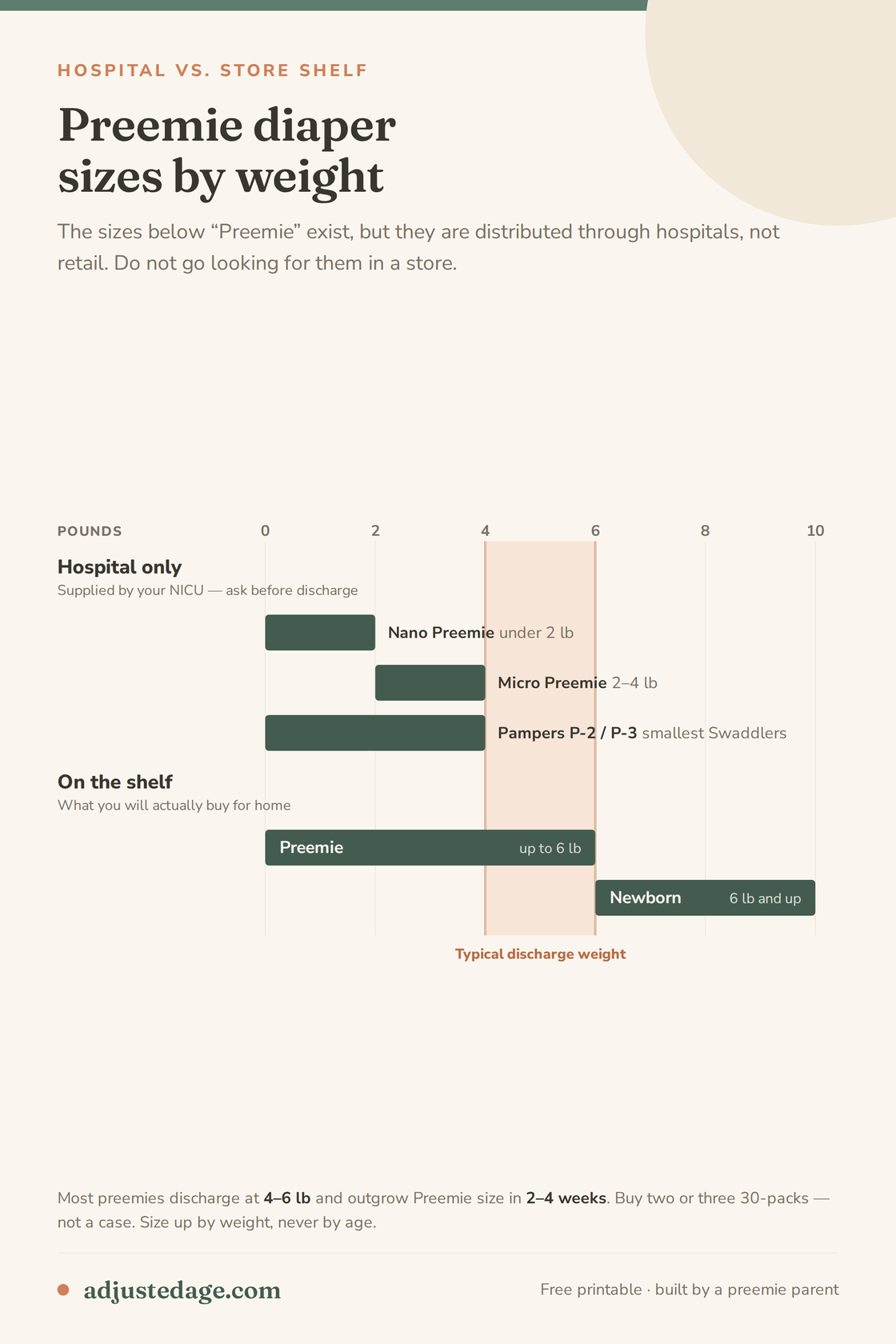
Diaper brands make sizes far smaller than what's on the shelf, but they're distributed through hospital channels, not retail:
- Huggies Nano Preemie — for babies 2 lbs and under, developed with NICU nurses for the smallest patients
- Huggies Micro Preemie — 2–4 lbs
- Pampers preemie sub-sizes (P-2, P-3) — the smallest Swaddlers, also primarily hospital-supplied
While your baby is in the NICU, the unit provides these. If you want backups of a micro size at home for some reason, ask your NICU — they can often send you home with a stash or tell you how to order through a medical supplier. Don't hunt for them on store shelves; that's not where they live.
What you'll actually buy: Preemie size (up to 6 lbs)
Most preemies are discharged somewhere between 4 and 6 pounds — squarely in retail “Preemie” size territory. The one you'll find reliably stocked:
Huggies
Huggies Little Snugglers, Size Preemie (up to 6 lbs)
- The brand most US NICUs use — your baby is probably wearing one right now
- Umbilical cord notch protects healing belly buttons
- Wetness indicator saves unnecessary 3am undressing
- Pocketed back waistband contains the blowouts small babies somehow produce
We may earn a small commission — at no extra cost to you.
Honest advice: buy one small pack before you commit to a case. Fit is what decides it — watch whether it gaps at the legs, and stay with whatever works until the next size up. Pampers makes a Size P too, but it is far easier to find on a store shelf than online.
How many preemie diapers to buy
Fewer than you think. A newly-home preemie goes through 8–12 diapers a day, but they also gain weight fast once feeding clicks — many babies are out of preemie size within 2–4 weeks of discharge. Two or three 30-packs is a sane starting point; set up a subscription only after you've watched their growth curve for a couple of weeks. (This is the same lesson as preemie clothes: buy small quantities of the small sizes.)
Getting the fit right on a tiny baby
- Snug at the waist with the top below the umbilical stump (or use the notch) until it heals
- Leg cuffs flipped out and sealed against the thighs — gaps there are where preemie leaks happen
- Two fingers should fit under the waistband — tighter marks the skin, looser leaks
- Move up a size when you see red marks, frequent leaks, or the tabs reaching past the hip — by weight, not by age
Wipes for preemie skin
Preemie skin is thinner and more permeable than term-baby skin, which is why many NICUs use water-based wipes (or literally just water and cotton) for the first stretch. At home, fragrance-free and alcohol-free is the rule; the fewer ingredients the better.
WaterWipes
WaterWipes Sensitive+ Baby Wipes
- 99.9% water — the minimal-ingredient wipe many NICUs stock
- Fragrance-free and alcohol-free for thin, sensitive preemie skin
- Works for face and hands too, which matters during RSV season
- Buy the multipack — you will use more than seems possible
We may earn a small commission — at no extra cost to you.
Sizing up: preemie → newborn and beyond
Newborn size starts around 6 lbs and overlaps preemie size at the top end — if your baby is 5.5 lbs and chunking up fast, skipping straight to newborn with snug-fitted cuffs is reasonable. Diaper sizes, like car seat limits, run on weight, not age — adjusted or otherwise. Your baby moves up when the scale says so.
Diapers are one corner of the bring-a-small-baby-home puzzle. The sizing maze is the same one preemie clothes have — our preemie clothing size chart decodes that side — and if you're stocking up before delivery, the hospital bag guide for early deliveries covers what's actually worth packing.
The first time we bought diapers for our son — actual diapers, from an actual store, for a baby coming home — I stood in the aisle grinning like an idiot. It's a small errand that means everything. Enjoy it.
Common questions
What size diapers do preemies wear?
Retail "Preemie" size fits babies up to about 6 pounds — that's what most families buy at discharge. Smaller sizes exist (Huggies Micro Preemie for 2–4 lbs and Nano Preemie for under 2 lbs) but they're hospital-supplied, not store-stocked: the NICU provides them during the stay.
How many preemie diapers should I buy?
Less than you'd think. Preemies go through 8–12 diapers a day but often outgrow preemie size within 2–4 weeks of coming home. Start with two or three 30-packs and watch the growth curve before committing to bulk boxes or subscriptions.
When should my preemie move up to newborn size diapers?
Go by weight and fit, not age: red marks at the waist or thighs, frequent leaks, or tabs stretching past the hips mean it's time. Newborn size starts around 6 pounds and overlaps the top of preemie size, so a fast-gaining 5.5-pound baby can often move up early.
Free: The NICU Parent Starter Pack
Three printables in one file: the NICU survival checklist, the preemie clothing size guide, and the paced feeding quick-reference.
No spam. Unsubscribe any time.
Written by
Kadeem · Preemie dad
Kadeem's son was born at 29 weeks and spent 45 days in the NICU. He built Adjusted Age to give preemie parents the answers he wished he'd had.
Not a medical professional. This guide is based on published guidance from sources like the CDC and AAP, and our own experience. Always check with your baby's care team.
Keep reading
Preemie Coming-Home Outfits: Real Sizing, Car-Seat Safety, and What Actually Fits (2026)
The "newborn" coming-home outfit swallows a 4-pound preemie — and bulky layers are unsafe in a car seat. Here's realistic preemie sizing, the car-seat-harness rule for the going-home outfit, and the NICU-friendly pieces that actually fit.
June 13, 2026
Best Diaper Bags for NICU and Preemie Parents: Built for Hospital Days (2026)
NICU parents haul pump parts, milk coolers, and twelve-hour-day supplies, not just a few diapers. Here's what makes a bag work for hospital life — and three backpacks that fit the job at every budget.
June 13, 2026
Best Bottle Sterilizers and Drying Racks for Preemie Parents (2026)
For a preemie with an immature immune system, the CDC says sanitize feeding items at least once a day. Here's what that actually requires — plus the sterilizers and drying racks worth owning, from all-in-one machines to a few-dollar microwave bag.
June 13, 2026